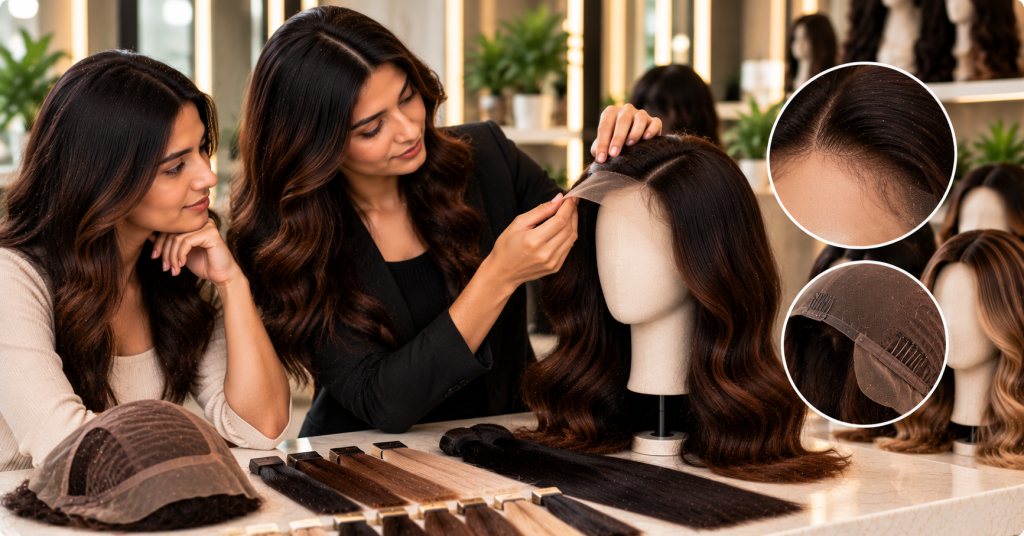
Everything You Should Know Before Choosing a Lace Front Wig
Choosing the right lace front wig can help you achieve a natural-looking hairstyle while enjoying the flexibility to change your look. Lace front wigs are popular because they feature a lace panel at the front that creates the appearance of a natural hairline when properly fitted and styled.
Whether you are buying your first wig or looking to add another style to your collection, understanding the available options can help you make the right choice.
At Hair Source India, this guide explains everything you should know before choosing a lace front wig, including lace types, hair quality, cap construction, colour, density, and maintenance.
What Is a Lace Front Wig?
A lace front wig is a wig designed with a sheer lace panel along the front hairline. Individual hairs are attached to the lace to create the appearance of hair growing naturally from the scalp.
The remaining portion of the wig may use a different cap material to provide structure and support.
Lace front wigs are available in human hair and synthetic hair options, with different lengths, textures, colours, and styles. They can be suitable for everyday wear, professional settings, special occasions, and fashion styling.
1. Understand the Different Types of Lace Front Wigs
Before choosing a lace front wig, understand the available lace options and how they may affect appearance, comfort, and maintenance.
Standard Lace Front Wigs
Standard lace front wigs feature lace along the front hairline, while the rest of the cap uses another construction.
They are a popular option for people who want a natural-looking front hairline without requiring lace across the entire scalp.
HD Lace Front Wigs
HD lace is designed to be very thin and delicate, helping it blend with the skin when appropriately fitted.
Its appearance depends on skin tone, lighting, lace quality, and application technique. Because the material can be delicate, careful handling is important.
Transparent Lace Front Wigs
Transparent lace is designed to offer a less noticeable appearance across different skin tones. Depending on the individual, some adjustment or tinting may still be required for a seamless blend.
How to Choose the Right Lace
Consider your skin tone, preferred hairline appearance, experience with wig application, and willingness to handle delicate materials carefully.
The finest lace is not necessarily the best option for everyone. Choose a product that balances appearance, durability, comfort, and maintenance.
2. Choose Between Human Hair and Synthetic Hair
The type of hair used in a lace front wig affects its appearance, styling options, and care requirements.
Human Hair Lace Front Wigs
Human hair wigs use real human hair and can offer natural movement and styling flexibility.
Depending on hair quality and processing, they may be suitable for people who want to curl, straighten, or restyle their wig. They generally require regular care to maintain their appearance.
Synthetic Lace Front Wigs
Synthetic wigs use manufactured fibres designed to replicate the appearance of natural hair.
Many synthetic wigs retain their intended style with relatively little restyling. However, heat tolerance varies by fibre type, and some synthetic wigs cannot be styled using conventional heat tools.
Which Option Is Better?
Human hair may be suitable if you want greater styling flexibility and natural hair movement. Synthetic hair may be a practical option if you prefer a pre-styled appearance and a different maintenance routine.
Your budget, styling preferences, and expected frequency of use should guide your decision.
3. Select the Right Wig Cap Construction
Cap construction affects the fit, comfort, and overall appearance of a wig.
Lace Front Cap
A lace front cap provides a lace panel at the front hairline, with the remaining sections made from other cap materials.
This construction can provide a natural-looking hairline while offering different options for cap structure and support.
Full Lace Wig
A full lace wig uses lace across most or all of the cap, depending on the design. It may offer more flexibility for parting and styling than a standard lace front wig.
Full lace construction can require careful handling and may involve different fitting and maintenance requirements.
Monofilament Cap
Monofilament construction uses a fine mesh material in selected areas of the cap. Depending on the design, it can support a realistic-looking scalp appearance and different hair-parting options.
Basic Cap Construction
Basic wig caps use structured materials to hold the hair in place. They may suit people who prioritise a practical design and a particular price range.
Always check the product specifications to understand exactly how the cap is constructed.
4. Choose the Correct Wig Size
A comfortable fit is essential when choosing a lace front wig. A wig that is too tight may cause discomfort, while one that is too loose may shift during wear.
Measure your head according to the supplier’s instructions before ordering. Common measurements include head circumference, front-to-back length, and ear-to-ear width.
Compare your measurements with the manufacturer’s size chart rather than assuming that one standard size will fit everyone.
Some wigs include adjustable straps or other fit-adjustment features. These can help improve stability, but they should not be used to compensate for a substantially incorrect cap size.
5. Find the Right Hair Colour
Choosing a suitable hair colour helps the wig complement your skin tone, facial features, and personal style.
Natural Hair Colours
Black, dark brown, medium brown, and other natural shades are versatile choices for everyday wear.
Blonde and Highlighted Colours
Blonde shades, highlights, and blended colours can create a brighter or more dimensional look. Consider whether the colour suits your desired style and maintenance preferences.
Fashion Colours
Red, burgundy, copper, and other fashion shades can help you experiment with different looks without colouring your natural hair.
Colour Matching Tips
Compare available shades in natural lighting whenever possible. Consider your skin undertone, eyebrow colour, and preferred hairstyle.
Remember that product photographs may display colours differently depending on lighting and screen settings.
6. Select the Right Wig Length and Density
Wig length and density influence the overall appearance and styling possibilities.
Short Wigs
Short lace front wigs can provide a lightweight-looking style and may be easier to manage for everyday wear.
Medium-Length Wigs
Medium-length styles offer versatility for straight hairstyles, waves, curls, and layered cuts.
Long Wigs
Long wigs can create dramatic hairstyles, but they may require more detangling and maintenance to prevent tangling.
Choosing the Right Density
Density refers to the amount of hair attached to the wig cap.
Lower density may create a softer, lighter appearance, while higher density produces a fuller hairstyle. The best option depends on your preferred look, facial features, and styling habits.
Choose a density that looks balanced rather than selecting the fullest option automatically.
7. Consider the Hairline and Parting Space
One of the main features of a lace front wig is its ability to create a natural-looking front hairline.
Consider the shape of the hairline, the placement of the lace, and how the wig will be styled.
Some lace front wigs provide limited parting flexibility because lace is only present at the front. If you want to change your parting frequently or create different styles across the scalp, check the cap construction before purchasing.
A suitable haircut and careful styling can improve the overall appearance and help the wig complement your face.
8. Understand Wig Installation Methods
Lace front wigs can be worn using different fitting methods, depending on the cap design and the wearer’s preferences.
Glueless Installation
Some wigs can be secured without adhesive using adjustable straps, combs, elastic bands, or other built-in features.
This may be convenient for people who prefer to remove their wig regularly.
Adhesive Installation
Compatible wigs can be secured with suitable wig adhesive or tape to help hold the lace in place.
Application requires care, and products should be appropriate for the intended use and the individual’s skin.
Professional Installation
Professional installation can help achieve suitable placement, lace trimming, and styling, particularly for beginners.
Always follow the manufacturer’s instructions. Avoid applying adhesive to irritated or broken skin, and remove the wig safely rather than pulling forcefully on the lace.
9. Check the Hair Quality Before Buying
Hair quality affects the wig’s appearance, manageability, and expected lifespan.
Hair Texture
Check whether the texture matches the look you want, such as straight, wavy, or curly.
Hair Processing
Ask whether the hair has been coloured, bleached, or chemically treated, as processing may affect its condition and styling performance.
Shedding and Tangling
Review the supplier’s product information and care recommendations. Hair quality, construction, and maintenance all influence shedding and tangling.
Product Specifications
Check the wig length, density, cap size, lace type, colour, and hair type before ordering.
Supplier Reliability
Choose a supplier that provides clear product descriptions, accurate photographs, care instructions, and transparent purchasing policies.
10. Learn How to Maintain a Lace Front Wig
Proper maintenance helps preserve the appearance and condition of your lace front wig.
Washing
Wash the wig when needed using products suitable for its hair type and construction. Follow the supplier’s instructions to avoid damaging the lace or hair.
Brushing
Detangle gently, starting at the ends and working upwards. Avoid pulling or tugging at the lace.
Heat Styling
Human hair wigs may support heat styling, depending on their quality and processing. Synthetic wigs require particular attention to heat limitations.
Use heat protection where appropriate and avoid excessive temperatures.
Drying
Follow the manufacturer’s drying instructions. Allow the wig to dry thoroughly before storing it.
Storage
Store the wig on a suitable wig stand or in a clean storage container to help preserve its shape and reduce tangling.
Lace Care
Handle the lace carefully during cleaning and removal. Excessive pulling, harsh cleaning, and improper adhesive removal can damage the delicate material.
11. Common Mistakes to Avoid When Choosing a Lace Front Wig
Choosing the Wrong Size
An incorrect cap size can affect comfort and stability. Measure your head and compare it with the supplier’s size chart.
Selecting Lace Without Considering Your Needs
Very delicate lace may provide a discreet appearance but can require extra care. Consider your experience level and intended frequency of use.
Ignoring Hair Density
Excessive density may create an unnatural appearance, while insufficient density may not deliver your preferred style.
Choosing the Wrong Hair Type
Consider styling flexibility, maintenance, and budget before choosing between human hair and synthetic fibres.
Using Unsuitable Adhesives
Choose products appropriate for wig application and your skin. Follow application and removal instructions carefully.
Neglecting Maintenance
Improper brushing, washing, storage, and lace handling can affect the wig’s appearance and condition.
Frequently Asked Questions About Lace Front Wigs
1. What Is the Main Advantage of a Lace Front Wig?
A lace front wig can create a natural-looking front hairline while offering a variety of hairstyles, colours, and lengths.
2. Are Lace Front Wigs Suitable for Beginners?
Yes. Beginners may prefer wigs with adjustable straps or glueless designs because they can be easier to put on and remove. The best option depends on the cap construction and individual experience.
3. Which Is Better: HD Lace or Transparent Lace?
Neither is automatically better for everyone. The best option depends on skin tone, lace quality, application technique, durability requirements, and personal preference.
4. Can I Style a Human Hair Lace Front Wig?
Many human hair lace front wigs can be curled or straightened, depending on hair quality and processing. Follow the manufacturer’s instructions and use suitable heat protection.
5. How Long Does a Lace Front Wig Last?
The lifespan depends on hair quality, lace construction, frequency of use, styling habits, and maintenance. Follow the supplier’s recommendations and inspect the wig regularly for wear.
6. Can I Sleep While Wearing a Lace Front Wig?
Removing a wig before sleeping may help reduce friction, tangling, and stress on the lace. Follow the manufacturer’s recommendations for your particular wig.
7. How Do I Make a Lace Front Wig Look Natural?
Choose a suitable lace type, cap size, hair colour, density, and hairline design. Proper placement, trimming when appropriate, and professional styling can further improve the appearance.
8. How Should I Clean a Lace Front Wig?
Use products suitable for the wig’s hair type and base construction. Handle the lace gently and follow the supplier’s washing and drying instructions.
Conclusion
Choosing the right lace front wig involves more than selecting a hairstyle. Lace type, hair quality, cap construction, size, colour, density, installation method, and maintenance all influence the final result.
Take time to compare product specifications and consider your styling preferences, comfort requirements, and budget before making a decision.
Hair Source India can be a starting point for exploring wig options. Review the available product details carefully to find a lace front wig that suits your individual needs.
Looking for a lace front wig? Explore the Hair Source India collection to discover available styles and compare options for your preferred look.


Sed reprehenderit quam, non felis, erat cum a, gravida lorem a. Ultricies in pellentesque ipsum arcu ipsum ridiculus velit magna, ut a elit est. Ultricies metus arcu sed massa. Massa suspendisse lorem turpis ac.
Aute mi ut suspendisse velit leo, vel risus ac. Amet dui dignissim fermentum malesuada auctor volutpat, vestibulum ipsum nulla.
Massa suspendisse lorem turpis ac. Pellentesque volutpat faucibus pellentesque velit in, leo odio molestie, magnis vitae condimentum.
Comments are closed.